The One Skill Every College Wants (That No One Teaches)
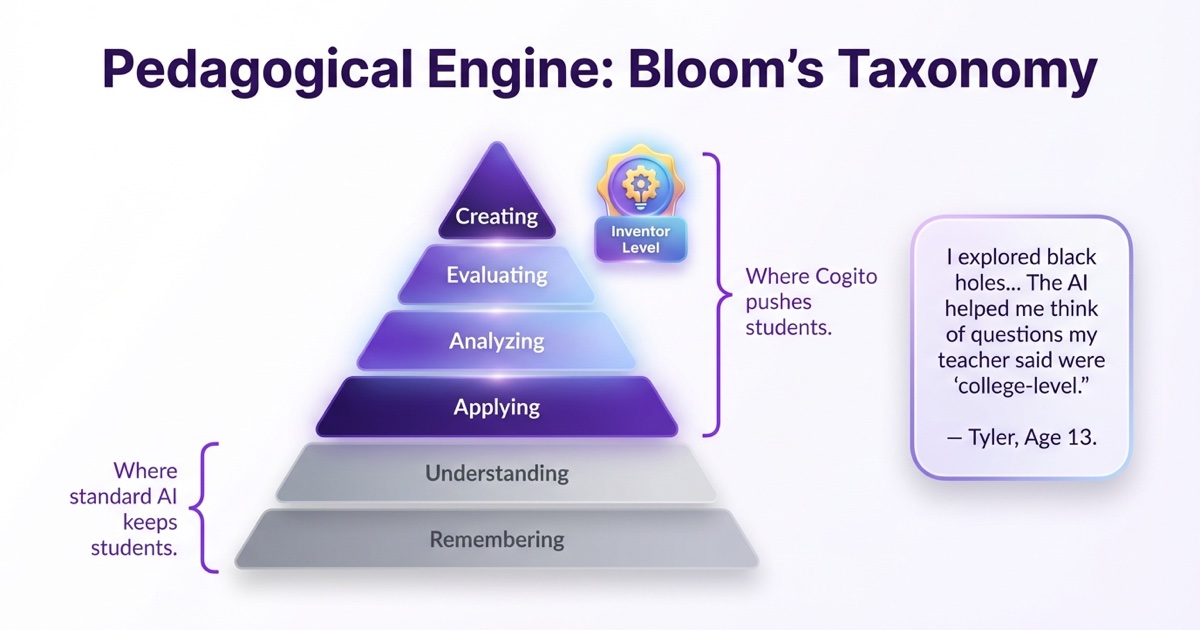
If you read what college admissions officers actually say they're looking for, a pattern shows up fast. They don't talk about test scores the way they used to. They don't talk about GPA as the deciding factor.
They talk about intellectual curiosity. They talk about the ability to think through complex problems. They talk about students who can form their own arguments and defend them with evidence.
In other words, they talk about critical thinking. And then everybody nods, agrees it's important, and goes right back to teaching content.
The gap between what's valued and what's taught
The World Economic Forum's Future of Jobs report ranks critical thinking as the number one skill employers want. Not coding. Not data analysis. Not communication. The ability to reason clearly, evaluate information, and make sound decisions.
OECD research from 2026 confirms that structured Socratic questioning improves both content mastery and critical thinking simultaneously. The approach works. It's been validated repeatedly. The problem is that almost no schools use it at scale.
Here's why. Teaching content is measurable. You give a test, you get a score, you move on. Teaching thinking is harder to measure. How do you grade the quality of a question? How do you score someone's ability to spot a weak argument? Most schools don't have the tools, the training, or the class time.
So they test for recall. They test for procedures. And students learn to optimize for those tests instead of developing the skills that actually matter after graduation.
What critical thinking actually looks like in a child
It's easy to treat "critical thinking" as a vague aspiration. Something that sounds good on a college brochure but doesn't translate to everyday behavior.
Here's what it looks like in practice.
A child with strong questioning skills doesn't just accept what they're told. They ask why. They ask "what would happen if the opposite were true?" They dig into assumptions instead of skating over them. When their teacher says "the Civil War was fought over slavery," they don't just memorize it. They ask "Were there people who fought for reasons they believed were different? What made them think that?"
A child with strong evaluation skills reads an article and notices that all the evidence comes from a single source. They spot when someone is using emotional language to bypass logic. They can tell the difference between a fact and an opinion dressed up as a fact.
A child with strong decision-making skills considers multiple options before choosing. They think about what could go wrong, not just what could go right. They notice when their own biases are steering them toward a comfortable answer instead of the right one.
These aren't abstract abilities. They're concrete behaviors you can observe in a 10-year-old, if that 10-year-old has been practicing them.
Why this matters more now than it ever has
AI is getting better at everything content-related. It can write essays, solve equations, summarize research, and generate code. Every year, the list of things AI handles well gets longer.
That means the skills that appreciate in value are the ones AI can't replicate. Asking the right question when you don't know what you're looking for. Evaluating whether an answer is trustworthy when the answer sounds perfect. Making decisions under uncertainty with incomplete information.
These are thinking skills. And they compound over time. A child who spends two years practicing structured questioning thinks differently from one who spent those two years copying answers from ChatGPT.
Not worse at facts. Better at everything else.
How to actually build these skills
Some parents try the Socratic method at the dinner table. Asking follow-up questions, pushing their child to think deeper. That works when you do it consistently. But most of us aren't trained in Socratic questioning, and "tell me more about that" only gets you so far before you run out of follow-ups.
What research shows works is structured practice. Short, regular sessions where a child practices specific thinking skills with immediate feedback. The same principle behind learning an instrument or training for a sport: deliberate practice, not passive exposure.
Cogito Coach was built on this principle. Three modules, each targeting a different thinking skill: Curiosity Coach for questioning, Argument Analyst for evaluating claims, and Decision Coach for making better choices.
Each session takes about 10-15 minutes. Your child picks any topic they care about, from dinosaurs to social media to climate change. The AI coaches them through the thinking process at their grade level. And you get a detailed report showing how your child thinks. Not what they scored on a quiz, but how they approach problems, where their reasoning is strong, and where it needs work.
It's the skill colleges say they want. The skill employers rank number one. And it takes less time than a Netflix episode.
Schools test what your child knows. Nobody tests how they think.
Cogito Coach builds three thinking skills in 10-15 minute sessions: questioning, evaluating arguments, and making decisions. You get a report after each one.
Start Free TrialOne practical thinking tip every week.
Takes 2 minutes to read. No spam, no fluff.