The Feedback on My Kid's Essay Was Three Words Long
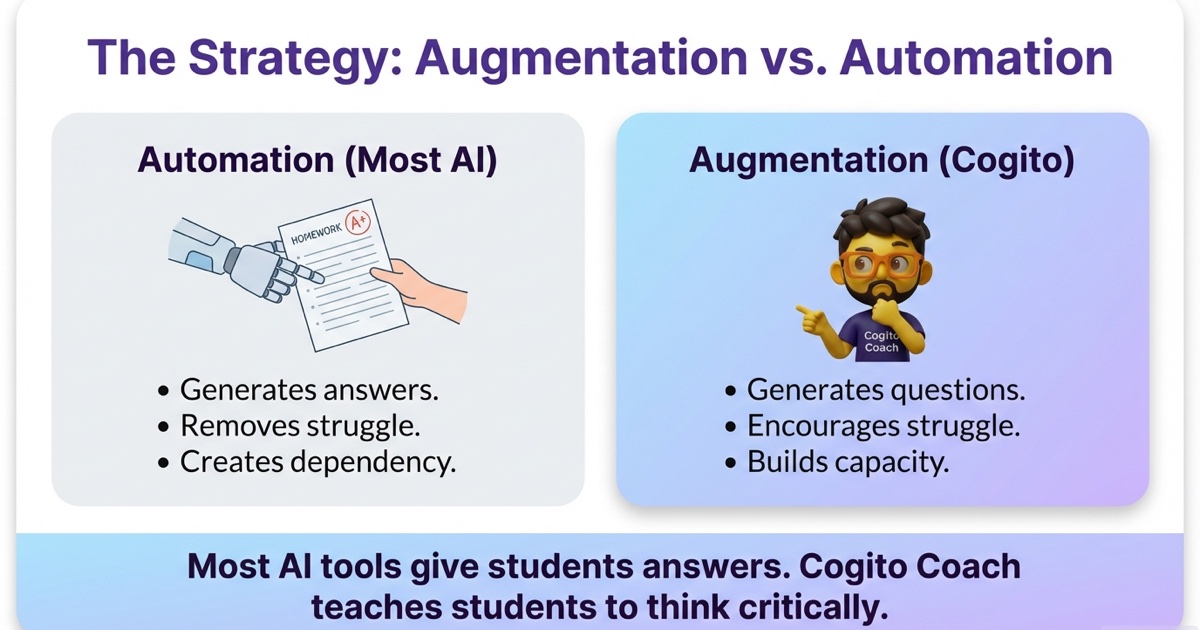
My 11-year-old spent two weeks on an essay about ocean pollution. She researched articles online, organized her argument into three sections, and revised her conclusion twice because the first version "didn't feel strong enough." Her words.
The feedback she got back from her teacher: "Good job. A."
Three words. Two of them generic. No mention of her argument structure. No questions about her sources. No indication that anyone had actually engaged with what she wrote. Just a grade and a compliment so vague it could apply to any essay ever turned in.
The Problem Isn't the Grade
I want to be clear about something: I don't blame her teacher. Not even a little. When you have 130 students turning in five-page essays, that's 650 pages to read, evaluate, and respond to. Add lesson planning, parent emails, standardized test prep, and the seventeen other things teachers juggle that nobody sees. The math doesn't work.
But here's what happened after she got that grade. She came home, glanced at the A, said "cool," and moved on. Two weeks of genuine effort, and the only thing she took away was a letter.
She doesn't know if her argument was strong or weak. She doesn't know whether her sources were credible or questionable. She doesn't know if the way she structured her reasoning actually held together. She got a score. She didn't get feedback.
Grades Tell You What. Not How.
We've built an entire education system around a single question: did this student get it right? A, B, C. Pass, fail. But grades measure compliance, not cognition. They tell you whether your child met the rubric, followed instructions, hit the word count. They tell you almost nothing about how your child thinks.
Can she evaluate evidence? Can she spot a weak argument in her own writing? Does she know which questions to ask when something doesn't add up? None of that shows up in a letter grade.
The World Economic Forum ranks critical thinking as the number one skill employers want. Colleges say they value it above test scores. And yet the primary feedback mechanism in most schools is a letter that says "you did fine" or "you didn't."
What We're Actually Missing
The real problem isn't bad teachers or lazy grading. It's that meaningful feedback on thinking requires exactly the kind of time and attention that the system has removed from the equation.
A thoughtful response to my daughter's essay might look like this: "Your second source contradicts your first one. Did you notice that? How would you resolve that tension?" Or: "You made a strong claim in paragraph three. What evidence would someone use to disagree with you?"
That kind of feedback changes how a child thinks. It teaches her to evaluate her own reasoning. It builds a skill she'll use long after she's forgotten everything about ocean pollution.
But it also takes 15 minutes per essay. Multiply by 130 students and you're asking for 32 extra hours. It's not a willpower problem. It's a structural one.
What I Started Doing Instead
After the three-word feedback incident, I started asking my daughter questions about her own work at the kitchen table. Not quiz questions. Thinking questions.
"How did you decide which sources to trust?" "What's the strongest part of your argument?" "If someone disagreed with your conclusion, what would they say?"
The first few times, she looked at me like I was punishing her. She'd already gotten the A. Why were we still talking about this?
But after a few weeks, something shifted. She started catching things on her own. She'd say, "I don't think this article is very good because it doesn't cite anything." Or she'd revise a paragraph and tell me, "The old version was just my opinion. This one has actual reasons."
She wasn't learning new content. She was learning how to think about content. And no letter grade was going to teach her that.
The Skill That Actually Transfers
Ocean pollution will be on the test for one semester. The ability to evaluate sources, construct arguments, and question your own assumptions? That transfers to every subject, every job, every decision your child will ever make.
A Harvard/UPenn study that made headlines in 2025 found that students using AI tutoring could answer 48% more practice problems but scored 17% lower on conceptual understanding. More answers, less thinking. That's the trade we're making when we optimize for grades over genuine cognitive growth.
Your child doesn't need another A. Your child needs someone to ask, "How do you know that's true?"
One Question Worth Trying Tonight
Next time your child brings home an assignment, skip the "what did you get?" question. Try this instead: "What was the hardest part to figure out?"
It's a small shift. But it tells your child that the thinking matters more than the score. And it might start a conversation that's worth more than three words of feedback ever could be.
See How Your Child Actually Thinks
One 15-minute Cogito session produces a detailed report showing your child's thinking patterns, question quality, and depth. Not a grade. Real feedback.
Start Free TrialOne practical thinking tip every week.
Takes 2 minutes to read. No spam, no fluff.